


|
|
|
|
|
|||
|
|||
/MAS%20WUL-FIN/BTN-30-home-30.jpg) |
||||
 |
(40)/D-J/DOLI-BaiTam-40.jpg) |
-55/BOOK-cort-40.jpg) |
|
|
 |
|
 |
|||
|
|||
 |
 |
 |
 |
/SEM-20-sen-lib-E-25.jpg)
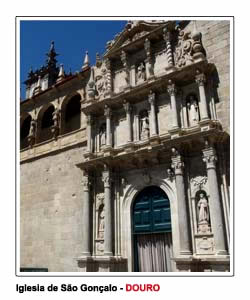
IGLESIA DE SÃO GONÇALO (AMARANTE)INFORMACIÓN HISTÓRICO-ARTÍSTICALa iglesia y el convento de São Gonzalo de Amarante es obra de un sacerdote católico (posteriormente santo) del siglo XVI, sobresale la fachada barroca con 3 cuerpos, el más inferior es el más bajo con columnas corintias sobre pedestales, el segundo solo con columnas y el tercero con columnas salomónicas coronándose en un frontón curvilíneo. Dentro en la capilla mayor se ubica la tumba del santo São Gonçalo. ENTRADAS Y HORARIOSTeléfono ayuntamiento: (86)99948-3799 |
 |
/SEM-20-sen-lib-I-25.jpg)
CHURCH OF SÃO GONÇALO (AMARANTE)HISTORICAL-ARTISTIC INFORMATIONThe church and the convent of São Gonçalo of Amarante is the work of a Catholic priest (later saint), from 16 th century, the Baroque façade stands out with 3 bodies, the inferior is the shortest with Corintian columns with pedestal; the intermediate only with columns and the upper with salomonic columns crowning in curvilinear pediment. Inside, right in the main chapel is located the tomb of the saint São Gonçalo. TICKETS AND TIMETABLEPhone number (86) 99948-3799 |
|
PUENTE DE SÃO GONÇALO (AMARANTE)INFORMACIÓN HISTÓRICO-ARTÍSTICAEl puente de Amarante es símbolo de la ciudad, y además un motivo de orgullo, al ser el lugar donde los lusitanos hicieron batalla a los ejércitos napoleónicos en el siglo XIX, sobre un antiguo puente romano, se erigió uno nuevo en el siglo XIII. En la ciudad puedes además visitar otras iglesias como las de São Pedro y São Domingos, ambas de estética barroca, datadas en el siglo XVIII ENTRADAS Y HORARIOSAcceso libre |
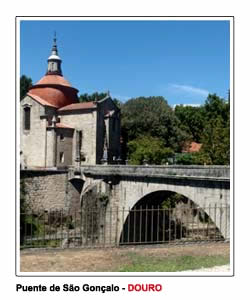 |
BRIDGE OF SÃO GONÇALO (AMARANTE)HISTORICAL-ARTISTIC INFORMATIONThe bridge of Amarante is a symbol of the city, and also a source of pride, being the place where the Lusitans fought against the Napoleonic armies in the 19 th century; over a Roman bridge was built a new bridge in the 13 th century. In the city you can also visit other churches such as São Pedro and São Domingos, both of Baroque style, dating from the 18 th century. TICKETS AND TIMETABLEFree access |
 |
TONGOBRIGA (MARCO DE CANAVASES)INFORMACIÓN HISTÓRICO-ARTÍSTICAJunto a un grupo de cabañas circulares de Freixo en la colina se ubican las estructuras de la ciudad romana de Tongobriga, quizás de época de Augusto; pero será en el siglo II d.C. cuando Tongobriga viva el máximo apogeo, posiblemente la ciudad ocupo 30 hectáreas. El Área Arqueológica do Freixo como también es conocida es Monumento Nacional. ENTRADAS Y HORARIOSEl horario de verano es de martes a viernes de 9:00-12:00 y de 15:00-19:00, sábados y domingos es de 15:00-19:00; el horario de invierno es de martes a viernes de 9:00-12:00 y de 14:00-17:00, sábados de 14:00-17:00 y domingos de 14:00-17:00. La entrada general es de 2€. |
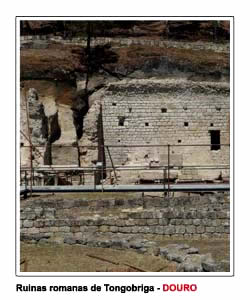 |
TONGOBRIGA (MARCO DE CANAVASES)HISTORICAL-ARTISTIC INFORMATIONNext to a group of circular huts of Freixo in the hill are located the structures of the Roman city of Tongobriga, perhaps built in Augustus time; but it will be in the 2 nd century AD. When Tongobriga lives the maximum apogee, possibly the city occupied 30 hectares. The Archaeological Area of Freixo as it is also known is National Monument. TICKETS AND TIMETABLESummer timetable is from Tusday to Friday from 9 am to 12 am and from 3 pm to 7 pm; Saturdays and Sundays is from 3 pm to 7 pm; winter timetable is from Tuesday to Friday from 9 am to 12 am and from 2 pm to 5 pm; Saturdays from 2 pm to 5 pm and Sundays from 2 pm to 5 pm. General admission € 2. |
|
 |
||
 |
|
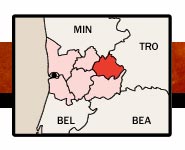
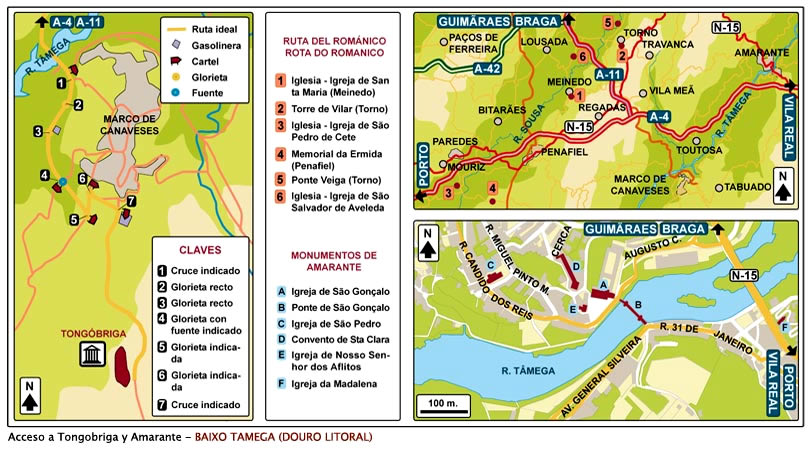
ACCESO A ENCLAVES-BAIXO-TAMEGAUBICACIÓNAMARANTE: Amarante se ubica entre Porto y Vila Real y la iglesia y el puente junto al río Tâmega. TONGOBRIGA: Marco de Canavases se encuentra entre Porto y Vila Real, desde la A-4 hay que coger la salida 14; justo a la entrada de Marco de Canavases tras pasar el puente del río Tâmega, encuentras un cartel hacia “Tongobriga”, tuerce ahí a la derecha; subirás una cuesta, pasaras recto dos glorietas (son las únicas glorietas sin cartelería), en la tercera sigue la cartelería. ACCESO PARA MINUSVÁLIDOSAMARANTE: Acceso factible para sillas de ruedas al puente. Acceso factible para sillas de ruedas, solo hay un pequeño escalón en la entrada de la iglesia. TONGOBRIGA: Acceso factible para silla de ruedas. |
ACCESS TO SITES-BAIXO TAMEGALOCATIONAMARANTE: Amarante is located between Porto and Vila Real and the bridge and the church next to the river Tâmega. TONGOBRIGA: Marco de Canavasses is located between Porto and Vila Real from the A-4 take the exit 4; just at the entrance of Marco de Canavases after passing the bridge of Tâmega river, you find a signpost for “Tongobriga”, here turn on the right; you will go up a slope, you will pass straight 2 roundabouts (they are the only roudabouts without signpostes), in the third roundabout follow the signpost. ACCESS FOR THE HANDICAPPEDAMARANTE: Access feasible for wheelchairs (bridge). Possible access for wheelchairs, there is only a small step at the entrance (church). TONGOBRIGA: Accessible for wheelchairs. |
 |
 |
||||||||||||||
-50/ACTUALIZADO-55.jpg) |
FIN-60/DOLI-BTN-1-60.jpg) |
OPORTO (BAJO) | -60/DOLI-BTN-2-60.jpg) |
OPORTO (ALTO) |  |
||||||||||
|
Septiembre de 2017 |
-50.jpg) |
-60/DOLI-BTN-3-60.jpg) |
AMARANTE Y MARCO | -60/DOLI-BTN-4-60.jpg) |
SANFINS | |||||||||
|
-60/DOLI-BTN-5-60.jpg) |
PENAFIEL-LOUSADA | -60/DOLI-BTN-6-60.jpg) |
MAIA |  |
||||||||||
-60/DOLI-BTN-7-60.jpg) |
POVOA DE VARCIM | -60/DOLI-BTN-8-60.jpg) |
VILA DO CONDE |
(INFO PRÁCTICA) |
|||||||||||
-60/DOLI-BTN-9-60.jpg) |
GONDOMAR-GAIA | ||||||||||||||
|
|||||||||||||||
WEB DESARROLLADA POR EXPERTOS EN ARQUEOLOGÍA Y TURISMO - WEB DEVELOPED BY ARCHAEOLOGY & TOURIST EXPERTS |
|||||||||||||||